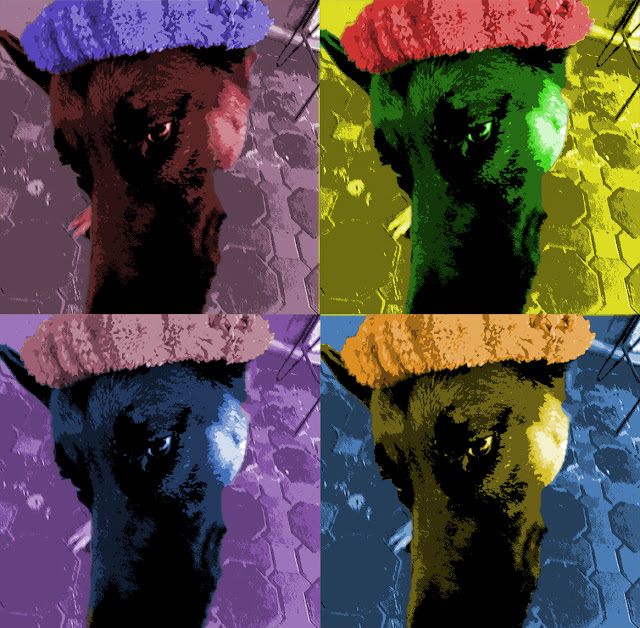
Repetition: refers to one object or shape repeated. Pattern: a combination of elements or shapes repeated in a recurring and regular arrangement. Rhythm: a combination of elements repeated, but with variations. Movement: the artwork moves in some way, or it may incorporate implied movement and Actual movement.
I have chosen autumn as a background. I used a baby that is wearing blue shirt, as an out of scale object. and the hidden objects are those little cute babies wearing teddy bear costume.
Text and text: a contrast in colors Text and background: contrast in colors, texture, and value Text and image: contrast in colors and textures Text, graphics (lines, shapes): contrast in colors and texture
Contrast : refer to the arrangement of opposite elements in a piece so as to create visual interest, excitement, and drama. Harmony : means all parts of the visual image relate to and complement each other and, can be achieved through repetition and rhythm.
Unity: occurs when all of the elements of a piece combine to make a balanced, harmonious, complete whole. variety: a way of combining visual elements to achieve intricate and complex relationships
Symmetrical balance: this is actually a symbol from a game (assassin creed). you can that this symbol or logo has the same thing on each side. the two sides are identical. And it really feels like a mirror. Well, symmetrical balance stands for formality and dullness but in this logo, it shows how formal is it and how well organized is it too. from: https://goo.gl/images/95Khqy asymmetrical balance: the artist has taken a really good and obvious view of those pines. there is a big pine on the left or you can say it is near. whatever that makes it look bigger. and on the right, there are 3 little pines which can lead us to say that it has equal visual weight. so that makes it balanced for the viewer and the photographer as well. it gives the photo a kind of enjoyment and interesting mood from: https://goo.gl/images/BaKs5Y Radial balance: it is actually based on circles and it achieves visual balancing by circles too. And th...
I think my design is balanced. so as you can see I drew a bike on the right which is one object and then on the left I drew two objects: a lantern and a basket full of food. If the basket was empty this picture won't be balanced so that is why I drew a basket full of food.